



Introduction
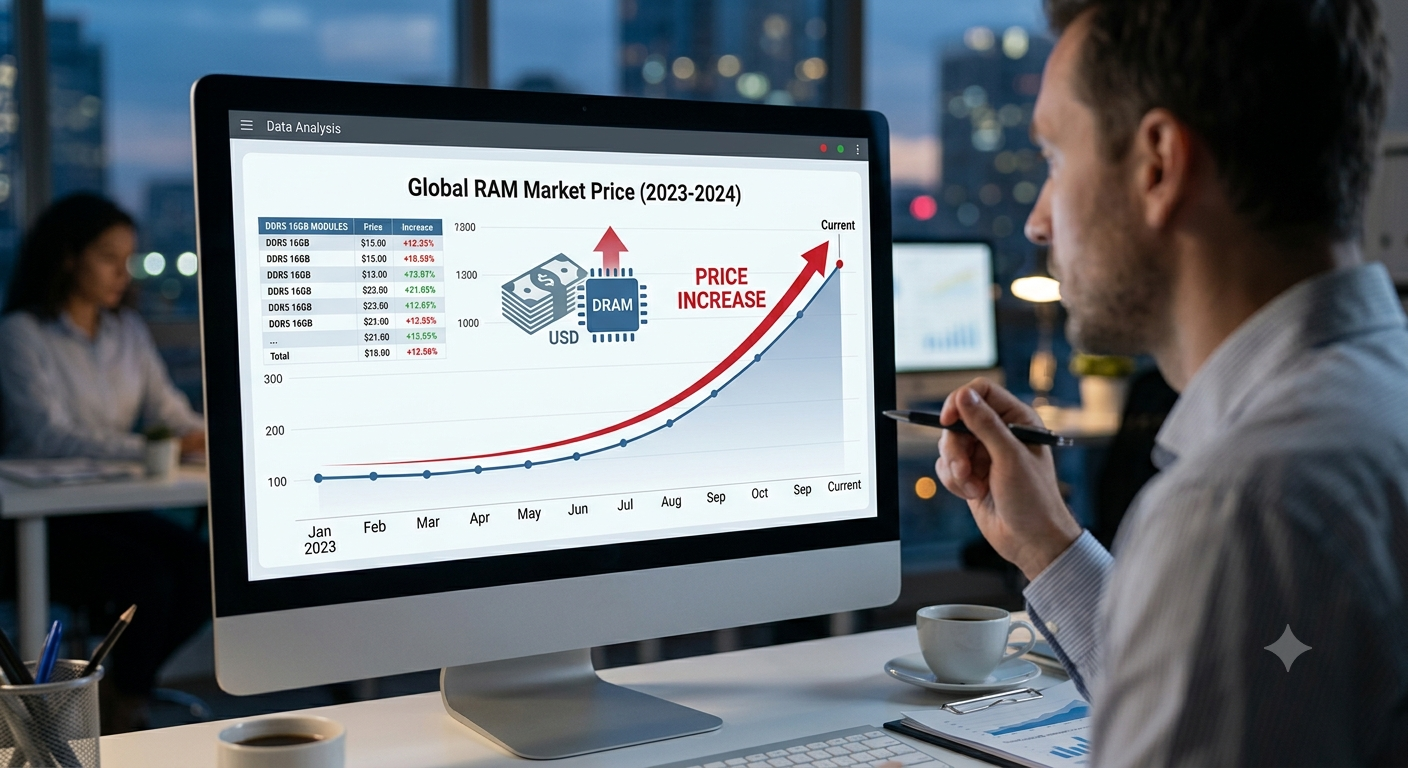
Artificial Intelligence (AI) is transforming the world faster than ever before. From chatbots and AI-powered applications to self-driving cars and advanced data centres, AI has become an important part of modern technology. However, this rapid growth has also created a new challenge for the technology industry: a shortage of RAM and storage devices.
RAM (Random Access Memory) and storage devices such as SSDs are essential components of computers, laptops, smartphones, and servers. As AI companies continue to build powerful systems and expand their data centres, the demand for these components is increasing significantly. This growing demand can put pressure on manufacturers, affect product prices, and create challenges for consumers and businesses.
In this blog, we will explore why AI is contributing to RAM and storage shortages, how these shortages affect the technology market, and what consumers can do to prepare for the future.

1. Why Is AI Increasing the Demand for RAM?
RAM is a type of computer memory that temporarily stores the information a device needs to access quickly. The more demanding the applications, the more memory a system may require.
Modern AI systems process enormous amounts of information. Training and running large AI models can require high-performance servers equipped with substantial amounts of memory.
For example, AI data centres use powerful computers to process language, generate images, analyse videos, and perform complex calculations. These systems often require specialised memory technologies, including high-bandwidth memory (HBM), which provides very high data-transfer speeds for AI processors.
As AI companies expand their computing infrastructure, memory manufacturers face growing demand for advanced memory products.
This creates pressure on the overall memory supply chain. However, it is important to understand that different memory products serve different purposes, so demand for specialised AI memory does not automatically mean every type of consumer RAM will become unavailable.
2. How AI Is Creating Storage Shortages
Storage is another critical part of the AI revolution. AI systems need enormous amounts of data to train models, generate responses, and support applications.
This data is stored on devices such as solid-state drives (SSDs) and hard disk drives (HDDs).
AI companies need storage for several purposes, including:
- Storing training datasets.
- Saving AI-generated images, videos, and other content.
- Managing information used by AI applications.
- Maintaining backups and archived data.
- Supporting cloud computing services.
As organisations build larger data centres, they need more storage capacity and faster storage systems.
Enterprise SSDs are particularly useful because they provide high speeds and reliable performance for demanding workloads. When demand for data-centre storage increases, manufacturers must balance the needs of large business customers with those of the consumer market.
The result can be higher prices, longer delivery times, or reduced availability for certain products, depending on market conditions.
3. The Role of AI Data Centres

AI data centres are among the biggest drivers of demand for computing hardware.
Companies developing advanced AI models need specialised processors, large amounts of memory, high-speed storage, networking equipment, and reliable power systems.
Unlike a typical home computer, an AI server may contain multiple powerful processors and large quantities of memory. Large facilities can contain thousands of servers working together.
As AI adoption expands, companies are investing heavily in new data-centre infrastructure. These investments increase demand for several components at the same time.
Memory and storage manufacturers must respond by increasing production, improving manufacturing efficiency, and investing in new technologies.
However, expanding semiconductor manufacturing capacity takes time and requires significant investment. Consequently, supply may not increase as quickly as demand during periods of rapid growth.
This imbalance is one reason why AI-related demand can contribute to supply pressure in the semiconductor industry.http://knolift.com
4. Will RAM and SSD Prices Increase?
One major concern for consumers is the possibility of higher RAM and SSD prices.
When demand grows faster than supply, manufacturers and retailers may increase prices. However, the actual price movement depends on several factors, including production capacity, inventory levels, competition, global economic conditions, and demand from other industries.
AI is an important factor, but it is not the only one.
For example, memory manufacturers may adjust their production plans to focus on products that offer stronger business opportunities. If this reduces the availability of certain consumer products, buyers could experience price increases.
On the other hand, new factories, improved manufacturing technologies, weaker demand, or increased competition may help stabilise prices.
Therefore, consumers should avoid assuming that all RAM and storage products will become more expensive at the same rate. Different capacities, product categories, and brands may experience different market conditions.
5. How the Shortage Could Affect Consumers
A shortage of memory or storage components can affect ordinary users in several ways.
Higher laptop and computer prices: If manufacturers face higher component costs, some of those costs may be passed on to customers.
More expensive upgrades: People planning to upgrade their computers with additional RAM or a larger SSD may need to spend more money.
Limited product availability: Certain memory capacities or storage models may become harder to find if supply tightens.
Higher smartphone production costs: Smartphones also depend on memory and storage components. Higher component costs may influence the pricing of future devices, although manufacturers can respond in different ways.
Challenges for small businesses: Businesses that depend on affordable computers and servers may face higher technology expenses.
Students, freelancers, gamers, content creators, and small business owners could be particularly affected if hardware prices rise while their budgets remain limited.
Conclusion
The rapid growth of artificial intelligence is changing the global technology industry, and RAM and storage are becoming increasingly important resources. AI data centres require substantial computing power, advanced memory, and large storage capacities to train and operate modern AI systems.
This growing demand can put pressure on manufacturers and contribute to price increases or supply constraints in certain market segments. However, the impact will vary depending on the type of memory, storage technology, production capacity, and overall market conditions.
For consumers, the best approach is to stay informed, compare prices, choose suitable hardware, and avoid unnecessary purchases based on speculation.
AI will continue to create opportunities across many industries. At the same time, ensuring an affordable and reliable supply of memory and storage will be essential for making the benefits of this technology accessible to everyone.
The future of AI depends not only on powerful software but also on the hardware and infrastructure that make intelligent systems possible.