



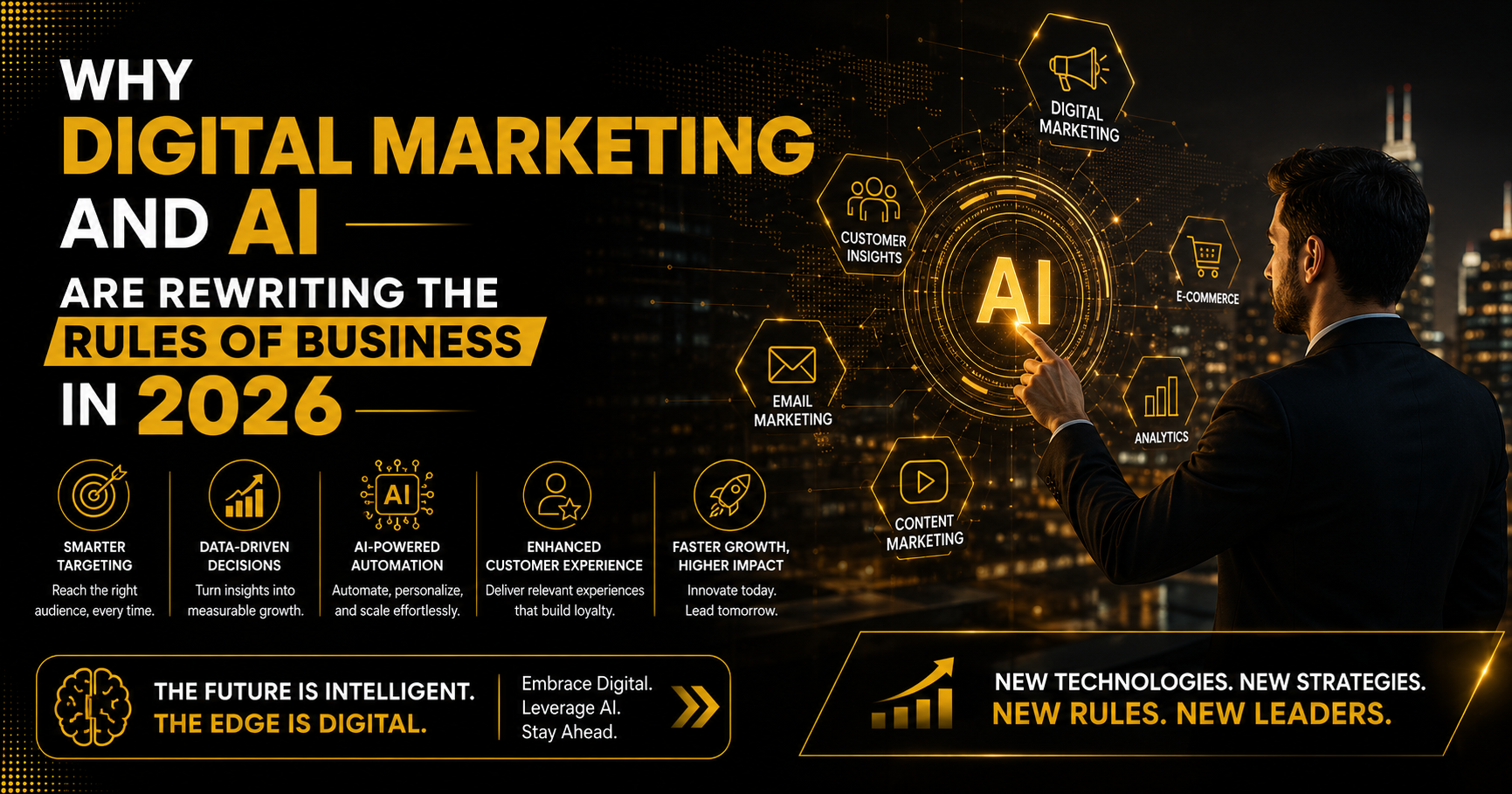
If you had asked a business owner five years ago how customers would find them, the answer was probably a mix of word of mouth, a few Google ads, and maybe a Facebook page. Fast forward to 2026, and that entire picture has changed. Digital marketing and AI are no longer optional extras sitting in the corner of a marketing plan. They are the plan. At Knolift, we spend a lot of time talking to founders and marketing teams who are trying to figure out where to focus their energy this year, and the honest answer keeps coming back to the same two words: digital marketing and AI.
The Shift Nobody Saw Coming
A decade ago, digital marketing meant posting on social media, running a few paid ads, and hoping your website ranked somewhere on the first page of search results. That approach still exists, but it is no longer enough. Today, digital marketing and AI work hand in hand to predict what a customer wants before they even search for it. Search engines have become smarter, algorithms understand intent rather than just keywords, and customers expect brands to know them almost personally.
This is exactly why digital marketing and AI are so tightly connected in 2026. Businesses that treat them as separate tools are already falling behind competitors who use them together to build smarter campaigns, faster content, and more personal customer journeys.
Why Digital Marketing and AI Are Important in 2026
There are a few clear reasons this pairing has become unavoidable for any brand that wants to grow.
1. Customers expect personalization, not generic ads. People are tired of seeing the same banner ad ten times a day. AI-powered digital marketing tools now analyze browsing behavior, purchase history, and even the time of day someone shops, so brands can show the right message to the right person at the right moment.
2. Content creation has sped up dramatically. Writing blog posts, product descriptions, and social captions used to take days. With AI woven into digital marketing workflows, teams can draft, test, and refine content in a fraction of the time, freeing up humans to focus on strategy and creativity instead of repetitive tasks.
3. Data is finally usable. Every click, scroll, and purchase generates data. Without AI, most of that information sat unused in spreadsheets. Now, digital marketing platforms use AI to turn raw numbers into clear recommendations, such as which product to promote next or which customer segment is about to churn.
4. Search behavior has changed. With AI-driven search experiences becoming mainstream, ranking well isn’t just about keywords anymore. It’s about answering real questions clearly and building genuine authority, which is exactly why digital marketing and AI strategies now go hand in hand with content quality.
5. Competition is global, not local. A small business in one city is now competing with brands from another country for the same customer’s attention. AI helps digital marketing teams monitor competitors, spot trends early, and adjust campaigns in near real time instead of waiting weeks for reports.
What This Means for Businesses Like Yours
At Knolift, we’ve noticed that the businesses growing fastest in 2026 aren’t necessarily the ones with the biggest budgets. They’re the ones using digital marketing and AI together in a smart, focused way. A small team with the right AI-assisted tools can now compete with agencies ten times their size, simply because the technology handles the heavy lifting of research, testing, and optimization.
This doesn’t mean the human touch is disappearing. If anything, it matters more. AI can generate a hundred headline options in seconds, but it still takes a person to know which one actually connects emotionally with a customer. The brands winning in digital marketing this year are pairing AI’s speed with human judgment, not replacing one with the other.
Where Things Are Headed
Looking ahead, digital marketing and AI will likely become even more woven into daily business operations. Expect to see more voice and visual search, smarter chatbots that actually resolve problems instead of frustrating customers, and predictive tools that tell marketers what content to create before a trend even peaks. Businesses that start building these habits now, rather than waiting until it becomes mainstream, will have a real head start.
Final Thoughts
The reason digital marketing and AI are so important in 2026 comes down to one simple idea: customers have more choices than ever, and their attention is harder to earn. Brands that use AI to understand their audience and deliver genuinely useful digital marketing will keep that attention. Those that don’t will keep shouting into a crowd that has already moved on.
At Knolift, we believe the future belongs to businesses willing to blend smart technology with real human insight. That’s the heart of good digital marketing and AI working together, not as a buzzword, but as a practical way to grow.
Frequently Asked Questions
1. Why is digital marketing and AI important in 2026? Because customer expectations have shifted toward personalization and speed. AI helps digital marketing teams analyze data, predict behavior, and deliver relevant content faster than traditional methods allow.
2. Can small businesses actually benefit from AI in digital marketing? Yes. AI tools have become more affordable and accessible, allowing small businesses to compete with larger companies by automating research, content creation, and campaign optimization.
3. Will AI replace human marketers? No. AI handles repetitive and data-heavy tasks, but human creativity, judgment, and emotional understanding remain essential for building genuine connections with customers.
4. How does AI improve search engine rankings? AI helps identify search intent, content gaps, and topics customers actually care about, allowing digital marketing teams to create more relevant and authoritative content.
5. What’s the first step to using AI in digital marketing? Start small. Use AI for tasks like analyzing customer data or drafting content, then gradually expand into automation and personalized campaigns as your team gets comfortable with the tools.